
Melanocortin Pigmentation Research: Receptors, Pathways, and Peptide Analogues


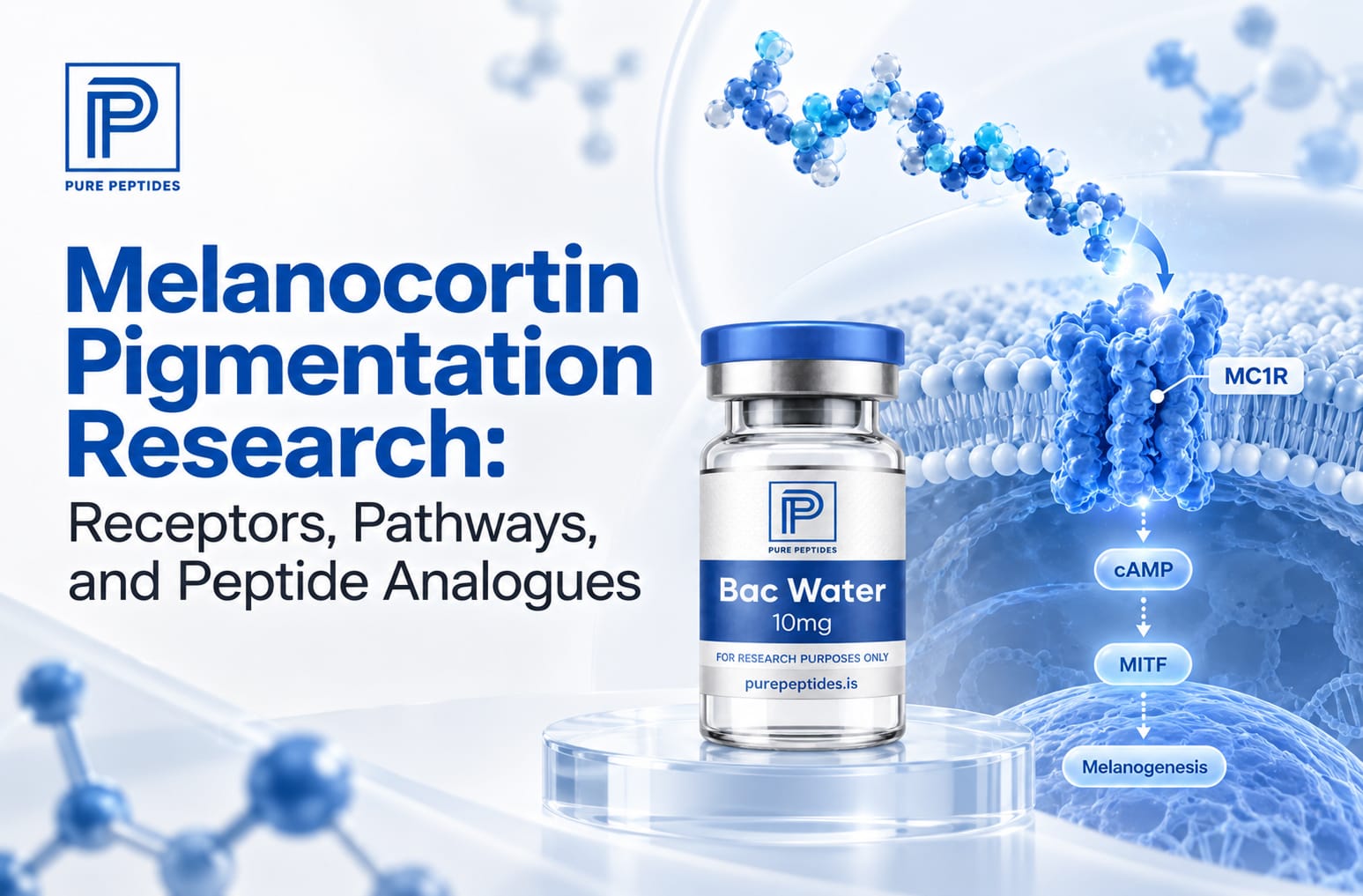
Melanocortin pigmentation research explores how melanocortin peptides interact with receptors and intracellular signalling pathways involved in melanocyte activity and melanin production. In particular, researchers examine α-MSH, MC1R, cAMP, and downstream pathways involved in melanogenesis.
Furthermore, synthetic peptide analogues provide useful research models for studying receptor interactions and signalling pathways. However, pigmentation involves multiple interconnected networks, so researchers consider genetic factors, environmental conditions, experimental models, and measured endpoints when interpreting findings.
For researchers and readers exploring peptide science, Pure Peptides provides research-focused information on melanocortin peptides, receptor activity, and related cellular pathways. In Canada, regulatory considerations should also be taken into account, particularly when distinguishing laboratory research from human use or therapeutic claims.
What Is the Melanocortin System?
The melanocortin system is a signalling network involving melanocortin peptides and five receptors: MC1R, MC2R, MC3R, MC4R, and MC5R. These receptors belong to the G-protein-coupled receptor family; however, their tissue distribution and biological functions differ.
Within pigmentation research, MC1R receives particular attention because melanocytes express this receptor. Therefore, researchers examine how melanocortin peptides interact with MC1R and influence downstream cellular pathways. Among the peptides derived from the POMC precursor, α-MSH is especially important because of its relationship with MC1R and pigmentation research.
| Component | Research Role |
|---|---|
| POMC | Precursor for several melanocortin peptides |
| α-MSH | Important ligand studied in pigmentation signalling |
| MC1R | Major receptor investigated in melanocyte research |
| cAMP | Intracellular signalling messenger |
| MITF | Transcription factor involved in melanogenic regulation |
| Tyrosinase | Enzyme involved in melanin synthesis |
Therefore, researchers can examine melanocortin pigmentation research at several levels. These include peptide-receptor interactions, intracellular signalling, gene regulation, and measurable changes in melanogenic markers.
Explore quality-tested research peptides with clear product information and laboratory-focused standards at Pure Peptides.
The Role of MC1R in Pigmentation
MC1R represents one of the most important research targets in melanocortin pigmentation studies. When α-MSH interacts with MC1R, the receptor can activate adenylyl cyclase and increase intracellular cAMP. Subsequently, cAMP-dependent signalling can influence protein kinase A (PKA), CREB, and MITF.
The pathway is commonly described as:
α-MSH → MC1R → adenylyl cyclase → cAMP → PKA/CREB → MITF → melanogenic genes
This sequence provides researchers with a framework for studying how an extracellular peptide signal can produce intracellular changes. In addition, it helps scientists connect receptor activity with downstream changes in melanocyte biology.
However, MC1R signalling does not behave identically in every biological system. Genetic variation in MC1R can influence pigmentation phenotypes and receptor responses. Furthermore, other signalling pathways can interact with the MC1R network.
As a result, researchers generally avoid treating MC1R activity as an isolated process. Instead, they examine receptor expression, genetic factors, intracellular signalling, and experimental conditions together.
Alpha-MSH and Melanogenesis Signalling
Alpha-MSH is an important reference peptide in melanocortin pigmentation research. Researchers study it to understand how melanocortin signals influence melanocyte signalling and downstream melanogenic processes.
When α-MSH activates MC1R, intracellular cAMP can increase. Subsequently, cAMP-dependent signalling can influence CREB and MITF. MITF then regulates the expression of several genes associated with melanogenesis, including genes encoding tyrosinase and related proteins.
Researchers may therefore examine several stages of the signalling pathway:
| Signalling Stage | Research Focus |
|---|---|
| Peptide interaction | α-MSH and MC1R communication |
| Second messenger | cAMP signalling |
| Protein signalling | PKA and CREB activity |
| Transcriptional regulation | MITF activity |
| Enzymatic response | Tyrosinase and related proteins |
| Cellular outcome | Melanin-related changes |
Importantly, the α-MSH–MC1R pathway does not operate independently. WNT signalling, endothelin-related pathways, stem cell factor signalling, ultraviolet exposure, and other cellular mechanisms can also influence melanocyte behaviour.
Therefore, researchers often describe melanogenesis as an interconnected signalling network rather than a simple linear pathway.
Tyrosinase, Melanin, and Pigment Production
Tyrosinase is a major enzyme in melanogenesis research because it catalyses important reactions involved in melanin biosynthesis. For this reason, researchers frequently measure tyrosinase expression or activity when evaluating pigmentation-related cellular models.
MITF also plays an important regulatory role. Specifically, it influences the expression of several melanogenic genes, including those associated with tyrosinase activity. Consequently, researchers may examine both MITF and tyrosinase to obtain a broader view of pathway activity.
Melanin itself includes different pigment types. Eumelanin contributes to brown and black pigmentation, whereas pheomelanin contributes to yellow and red pigmentation. The relative balance between these forms can vary according to genetic and biological factors.
| Research Component | Importance |
|---|---|
| MC1R | Receives melanocortin signals |
| cAMP | Transmits intracellular signals |
| MITF | Regulates melanogenic gene expression |
| Tyrosinase | Catalyses key reactions in melanin synthesis |
| Melanosomes | Sites of melanin production and storage |
| Keratinocytes | Receive melanosomes from melanocytes |
Because these components interact, measuring only one marker may not fully explain a pigmentation response. Instead, researchers often examine several markers across the pathway to build a more complete picture.
Peptide Analogues Studied in Pigmentation Models
Researchers study natural melanocortin peptides alongside synthetic analogues to investigate receptor activity and structure-function relationships. Alpha-MSH provides an important biological reference, while synthetic analogues allow scientists to explore how molecular modifications may influence receptor interactions.
Melanotan-1 and Melanotan-2 are examples of synthetic melanocortin analogues investigated within this broader research field. However, findings from one analogue should not automatically be applied to another.
| Peptide or Analogue | Research Context |
|---|---|
| α-MSH | Natural melanocortin signalling reference |
| ACTH-related peptides | Melanocortin receptor research |
| Melanotan-1 | Synthetic melanocortin analogue |
| Melanotan-2 | Synthetic melanocortin analogue |
Furthermore, researchers can evaluate peptide analogues through receptor-binding studies and cellular assays, with each method addressing different research questions. For example, studies may examine receptor interactions, signalling pathways, or melanogenic markers.
In Canada, the regulatory context is also relevant. Health Canada has identified Melanotan I and II among unauthorized injectable peptide products. Therefore, research findings should remain distinct from products intended for human use.
Explore quality-tested research peptides with clear product information and laboratory-focused standards at Pure Peptides.
Current Evidence and Research Limitations
Current melanocortin pigmentation research provides substantial information about MC1R signalling, cAMP, MITF, and melanogenic enzymes. However, translating findings between experimental systems remains challenging.
Cell culture models provide detailed molecular insights, while tissue and animal models offer greater biological complexity. However, species differences can affect receptor activity and pigmentation responses. Finally, human studies provide direct information about human biology, although study design, genetics, and measurement methods can influence interpretation.
| Evidence Type | Research Value | Main Limitation |
|---|---|---|
| Cell culture | Detailed molecular analysis | Simplified biological environment |
| Tissue models | Greater biological context | Limited system complexity |
| Animal models | More complex biological responses | Species differences |
| Human studies | Direct human relevance | Study-specific limitations |
Furthermore, evidence should not be treated as interchangeable between peptide analogues. A response observed with one melanocortin compound may depend on its molecular structure, receptor profile, concentration, and experimental environment.
Consequently, future studies can benefit from standardized experimental methods and more detailed comparisons between receptor activity, intracellular signalling, and downstream melanogenic responses.
Explore cellular pathways, collagen research, and emerging peptide science in Skin Peptide Research: Cellular Pathways, Compounds, and Current Evidence.
FAQ About Melanocortin Pigmentation Research
What is melanocortin pigmentation research?
Melanocortin pigmentation research examines how melanocortin peptides, receptors, and intracellular signalling pathways influence melanocyte activity and melanin-related processes.
Why is MC1R important in pigmentation research?
MC1R is a major receptor studied in melanocyte research because its activation connects melanocortin signals with intracellular pathways involving cAMP and downstream transcriptional regulation.
What role does alpha-MSH play in melanogenesis research?
Alpha-MSH is an important melanocortin ligand studied for its interaction with MC1R and its relationship with signalling pathways involved in melanogenesis.
Why do researchers study tyrosinase?
Tyrosinase catalyses important reactions in melanin biosynthesis. Therefore, researchers commonly examine its expression or activity when studying melanogenesis.
Which peptide analogues are studied in pigmentation models?
Researchers investigate several melanocortin-related peptides and analogues, including Melanotan-1 and Melanotan-2, to examine receptor interactions and structure-function relationships.
Can findings from one peptide analogue be applied to another?
Not necessarily. Different peptide structures, receptor interactions, concentrations, and experimental conditions can produce different research outcomes.
Final Thoughts
Melanocortin pigmentation research provides a framework for understanding how peptide signals interact with receptors and intracellular pathways involved in melanogenesis. In particular, researchers examine α-MSH, MC1R, cAMP, MITF, and tyrosinase to better understand pigment-related cellular processes and receptor activity.
Furthermore, synthetic melanocortin analogues offer additional models for studying structure-function relationships and signalling pathways. Pure Peptides provides research-focused information on melanocortin peptides, receptor activity, and related cellular mechanisms, while researchers should evaluate each compound according to its molecular characteristics, experimental model, and available evidence..
Disclaimer: This content is provided for educational and scientific research purposes only. Research peptides are intended for laboratory research only and are not intended for human consumption or medical use.
This article provides an interesting overview of how the melanocortin system is being studied in relation to pigmentation. I found the explanation of the signaling pathways particularly useful for understanding the biological basis behind pigment-related research.
I liked the research-focused approach to melanocortin and pigmentation rather than presenting the topic as a simple overview. The discussion of receptor activity and melanin-related pathways makes the subject much easier to understand.
The connection between melanocortin signaling and pigmentation is a fascinating area of research. I appreciated how the article explains the current scientific background while leaving room for further investigation into these biological mechanisms.