
Triple Receptor Agonist Research: GLP-1, GIP, and Glucagon Pathways

Triple receptor agonist research examines how a single molecule can engage three metabolically relevant receptor systems: glucagon-like peptide-1 (GLP-1), glucose-dependent insulinotropic polypeptide (GIP), and glucagon receptors. Unlike approaches focused on one signalling pathway, triple agonism allows researchers to investigate how several metabolic signals interact within the same pharmacological system. For researchers exploring metabolic compounds through […]
Retatrutide Mechanism of Action: GLP-1, GIP, and Glucagon Receptor Signalling
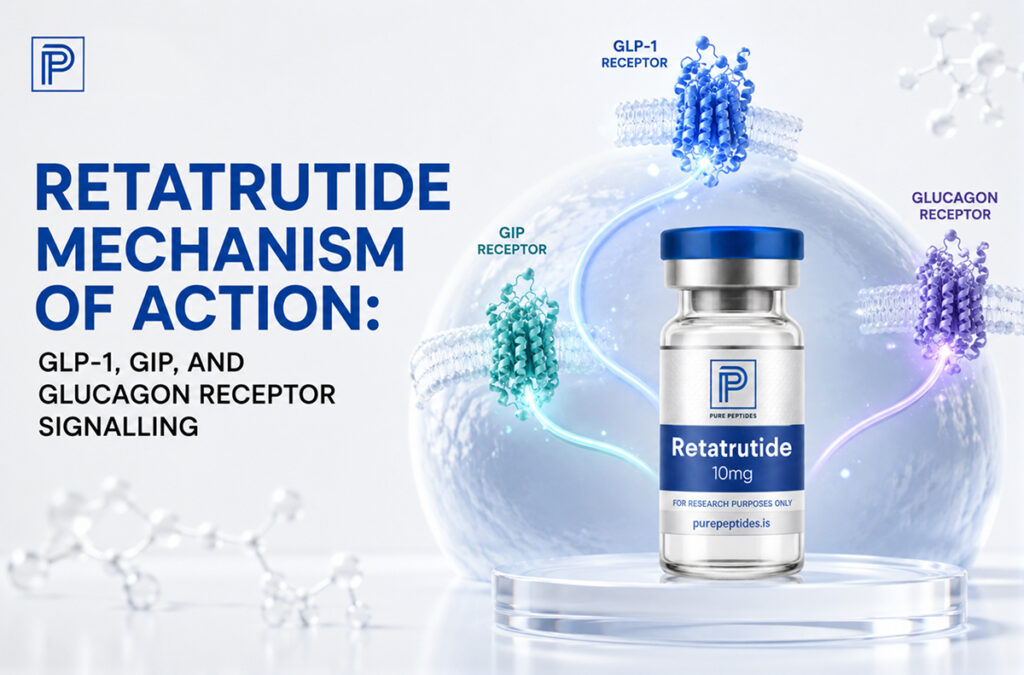
The retatrutide mechanism of action centres on simultaneous activity at three metabolically important receptors: glucose-dependent insulinotropic polypeptide (GIP), glucagon-like peptide-1 (GLP-1), and glucagon receptors. Retatrutide, also known as LY3437943, is a single engineered peptide rather than a mixture of three separate receptor agonists. For researchers exploring metabolic compounds through Pure Peptides, this triple-receptor design provides […]
Retatrutide Research: Clinical Studies, Metabolic Pathways, and Evidence
Retatrutide research has gained attention because this investigational peptide targets three metabolically relevant receptors within a single molecule: glucose-dependent insulinotropic polypeptide (GIP), glucagon-like peptide-1 (GLP-1), and glucagon receptors. This triple-receptor profile provides researchers with a model for examining how coordinated metabolic signalling may differ from single- or dual-receptor approaches. For researchers exploring laboratory materials through […]
Peptides in Metabolic Signalling Research: Pathways, Compounds, and Evidence
Research into peptides in metabolic signalling research examines how peptide signals regulate glucose homeostasis, energy balance, nutrient sensing, mitochondrial activity, and endocrine communication. In addition, these processes involve coordinated interactions among the gut, pancreas, liver, brain, skeletal muscle, adipose tissue, and other organs. For researchers exploring laboratory materials through Pure Peptides, understanding these pathways helps […]
Limitations of Preclinical Peptide Research: Evidence, Models, and Translation
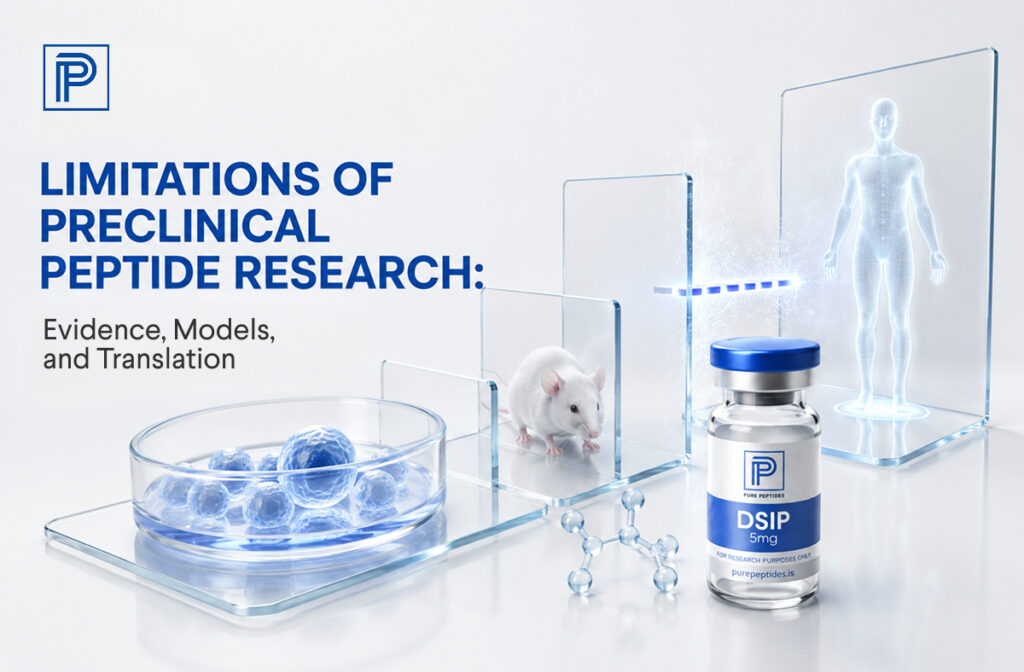
Understanding the limitations of preclinical peptide research is essential when interpreting evidence involving experimental peptides. Cell cultures, tissue models, and animal studies can reveal molecular mechanisms and biological responses, but they cannot independently establish how a peptide will behave in humans. For researchers evaluating laboratory materials from Pure Peptides, this distinction matters because experimental outcomes […]
BPC-157 Storage Guidelines for Laboratory Research
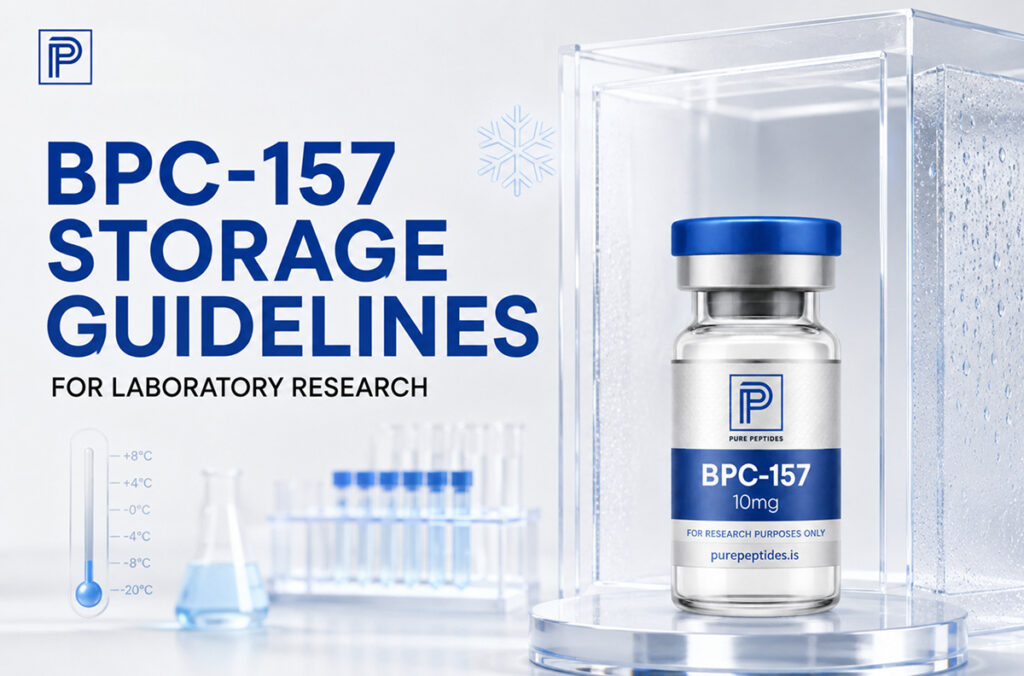
Proper BPC-157 storage is an important part of maintaining sample integrity and experimental reproducibility. Temperature, moisture, light exposure, contamination, and repeated handling may affect BPC-157 and other synthetic peptides. In addition, preparing a lyophilized peptide as a solution can change its storage requirements. Researchers sourcing laboratory materials from Pure Peptides should include storage in a […]
Peptides in Musculoskeletal Research: Tissue Models and Experimental Applications
Research into peptides for musculoskeletal research examines how peptide-related pathways interact with tendons, ligaments, skeletal muscle, cartilage, bone, and other connective tissues. These tissues differ considerably in structure and biology, so researchers use different experimental models and endpoints depending on the question being studied. BPC-157 and thymosin beta-4 (Tβ4) are among the peptides discussed in […]
Peptides and Angiogenesis: Signalling Pathways in Tissue Repair Research
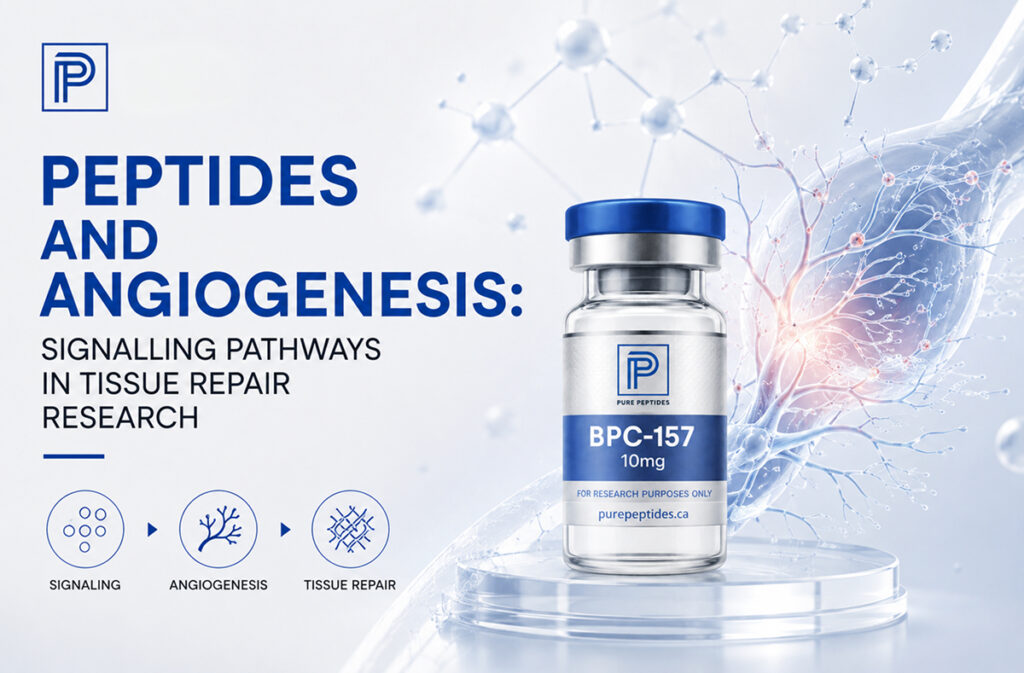
Research into peptides and angiogenesis examines how peptide-related pathways may influence vascular signalling, endothelial behaviour, and tissue remodelling. Angiogenesis—the formation of new blood vessels from existing vascular networks—is relevant to tissue research because vascular development supports oxygen delivery, nutrient exchange, and cellular communication. Several peptides, including thymosin beta-4 (Tβ4), BPC-157, and GHK-Cu, have been investigated […]
BPC-157 and TB-500 Blend Research: Rationale, Applications, and Limitations
BPC-157 TB-500 blend research explores whether two peptide research areas with different biological mechanisms can be studied together within tissue-response models. BPC-157 has been investigated primarily through cellular and vascular signalling, while TB-500-related research draws heavily from thymosin beta-4 (Tβ4) studies involving actin regulation and cellular migration. The rationale for combining them is therefore based […]
BPC-157 vs TB-500: Comparing Mechanisms and Research Applications
The BPC-157 vs TB-500 comparison is common in peptide research because both compounds appear in experimental studies involving cellular responses, angiogenesis, connective tissue, and tissue remodelling. However, their molecular backgrounds and proposed mechanisms differ substantially. BPC-157 is a synthetic 15-amino-acid peptide studied mainly in preclinical models. TB-500, meanwhile, is closely associated with thymosin beta-4 (Tβ4) […]